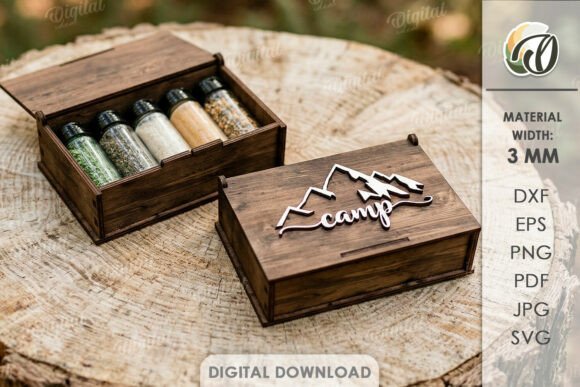
3D Travel Spice Box Laser Cut for Creative Sellers
If you're a digital product creator or online seller constantly on the lookout for fresh, versatile design assets, the 3D Travel Spice Box Laser Cut might just catch your eye. As someone who's tested hundreds of laser-cut designs for commercial use—especially in Etsy shops and print-on-demand platforms—I always look for a few key things: visual appeal, adaptability across products, and clear file quality. Let’s dive into how this graphic design asset stacks up from a practical, business-minded perspective.
First Impressions and Niche Appeal
The moment I unzipped the folder and saw the 3D Travel Spice Box Laser Cut, it was clear this is a design with personality. It feels handmade yet modern, which is a rare and valuable combo in today’s crowded creative marketplace. The box shape itself is clever—it’s not just a spice container; it’s a travel-themed decorative piece that could easily double as a packaging illustration or a whimsical storage idea for DIY enthusiasts.
This design leans into a rustic, artisanal vibe, making it especially appealing to small businesses focused on homeware, kitchen décor, or travel-inspired collections. Its clean lines and dimensional structure give it an elegant edge, while the subtle details hint at a handcrafted feel. That balance makes it ideal for both brand identity elements and standalone printable products.
Real-World Use Cases for Digital Sellers
One of the first questions I ask when evaluating any new design is: where can it be used? Here are some of the scenarios I see for the 3D Travel Spice Box Laser Cut:
- Etsy product listings: This design would work well as part of a themed design bundle for laser-cutters or woodworkers. Imagine selling it alongside matching travel-themed tags or label templates.
- Printable wall art: The 3D aspect adds depth, so it could make a great focal point in a set of digital paper packs or illustration bundles.
- Cricut projects: The SVG format is essential here, and the laser cutting lines appear clean and precise. It should cut smoothly on most materials like cardstock or acrylic.
- Canva templates: When layered into social media graphics or blog headers, the spice box brings a unique touch that stands out without being overwhelming.
- Merchandise graphics: For print-on-demand sellers, it can be adapted into tumbler wraps, mug prints, or tote bag designs with minimal effort. Just scale and place carefully.
- Greeting cards and invitations: Pairing it with handwritten fonts gives a warm, personal touch perfect for holiday or travel-themed events.
What I appreciate most is its versatility. It doesn’t scream “seasonal,” but it can fit into seasonal collections if styled right—think fall spices or winter gift packaging themes.
Testing Before You Sell
Before adding this to my shop or bundling it into a product kit, I’d take a few steps to ensure it meets professional standards:
- Test the SVG on real materials: Load it into your Cricut Design Space or Silhouette software and run a test cut on a scrap sheet of wood or cardboard. Check for alignment and line clarity.
- Preview on mockups: Use product mockup tools to see how it looks on items like mugs, wooden boxes, or tote bags. This helps determine whether the design holds up visually at different sizes and angles.
- Check PNG transparency: If you’re planning to sell it as a clipart or sticker design, confirm that the PNG has a clean alpha channel and no stray pixels.
- Review commercial license terms: Make sure the licensing allows for resale of finished products and digital distribution. Some assets restrict use beyond personal projects, and that’s a red flag for creators like us.
These tests help avoid surprises later—like misaligned cuts or poor visual performance on dark backgrounds.
Product Presentation and Visual Storytelling
When creating an online shop listing, the presentation of your graphic design asset matters. The 3D Travel Spice Box Laser Cut offers strong potential for building visual hierarchy and brand consistency, especially if you’re targeting a lifestyle or home décor niche.
For example, using this design in product mockups can instantly elevate the perceived value of your offerings. A high-quality preview showing the spice box assembled in a realistic setting (even digitally) builds customer trust and click-through rates.
I also recommend testing it in listing thumbnails. While the design is rich in detail, it needs enough contrast and white space to remain legible at smaller sizes. In some cases, simplifying the background or focusing on a key section may improve thumbnail performance.
Where This Design Shines
The Boxes category is one of the most popular for laser-cutting, and this design nails it. It works best in the following contexts:
- Large product previews: The intricate details come through better when displayed at full size, such as in a downloadable template or a tutorial-based listing.
- Themed design bundles: Combine it with travel-related clipart, icons, or patterns for a cohesive collection that speaks directly to hobbyists and small craft businesses.
- Digital downloads: Whether as a single SVG or part of a larger design pack, this asset adds a unique touch to your catalog, especially if paired with complementary fonts like a serif or script style.
- Decorative layouts: It fits naturally into planner stickers, scrapbooking kits, or even social media templates with a rustic or handmade aesthetic.
Its 3D structure also opens doors for packaging design ideas, such as custom labels or illustrated instructions for assembling the box. This kind of added value can justify higher pricing in competitive markets.
Potential Pitfalls to Watch For
While the 3D Travel Spice Box Laser Cut is impressive, there are areas where it might not perform as well:
- Tiny sticker details: The fine lines in the design may become unclear when scaled down for mini stickers or mobile app icons.
- Low-resolution prints: Avoid using it on print-on-demand sites unless you know they support high-resolution output. The design may lose clarity on poorly printed mugs or shirts.
- Crowded thumbnails: Too many overlapping elements can make the thumbnail look messy. Consider isolating the main feature or using it as an accent instead of the primary image.
- Dark backgrounds: Without proper lighting or color adjustments, the design may fade against darker tones. Always test it on both light and dark surfaces before finalizing a listing.
- Complex layering: If you plan to integrate it into more detailed layouts, keep an eye on how it interacts with other design elements. Overloading a layout can reduce readability and impact.
These aren't deal-breakers, but they’re important to consider depending on your target market and preferred selling platform.
Practical Seller Tips for Integration
Here are some quick tips for incorporating the 3D Travel Spice Box Laser Cut into your workflow:
- Use layered PNGs for more flexibility in editing and combining with other elements.
- Pair with appropriate typography: A serif font like Playfair Display or a bold display font works well for titles. For body text, stick to sans serifs like Lato or Montserrat for readability.
- Organize files clearly: Include notes on recommended materials, assembly instructions, and suggested colors. Clear documentation improves customer satisfaction and reduces returns or complaints.
- Optimize for multiple uses: If you’re selling this as a digital product, provide versions in SVG, DXF, and PNG formats to cover different user preferences and applications.
- Highlight commercial use rights in your product description. Buyers want to know upfront if they can resell the final item or use it for their own branding.
Final Thoughts for Creative Entrepreneurs
The 3D Travel Spice Box Laser Cut is a solid addition to your digital toolkit—if you're aiming for a handmade business or crafting merchandise graphics that feel thoughtful and authentic. It’s not the kind of asset that screams mass appeal, but it does have a specific charm that resonates with certain audiences, particularly those interested in Boxes and Laser Cutting projects.
As with any commercial design, it pays to test thoroughly. How does it look in a Canva template? Does it cut cleanly in your machine? Can it be adapted into seasonal collections? Answering these questions early will save time and money in the long run.
In short, this isn’t a flashy asset—but that’s exactly what makes it trustworthy. It’s the kind of design that blends creativity with functionality, offering just enough detail to stand out without becoming a headache to implement. For the right audience and the right platform, it can be a quiet but effective star performer.